
“Why does God allow bad things?” This is a question we often hear (in various forms) at youth group. Sometimes the kid in the back of the room asks it during a Wednesday night Bible study. Maybe it comes up in the parking lot after youth group. Or perhaps you receive a text at 11:00 p.m. as a student is worrying and wondering. The question might sound like: “If God is real, why did my dad get cancer?” “If God is good, why did he allow that school shooting?” Or “What kind of God lets kids starve?”
In some ways, this is THE question, known by theologians as the Problem of Evil. It’s one of the oldest and most difficult challenges to the Christian faith. Most of your students have probably wondered about the Problem of Evil at one time or another. If you’re lucky, they’ve voiced it. But even if you haven’t heard a student vocalize this question, you can assume it’s an unspoken one many of them carry.
Thinking through a biblical response to the Problem of Evil will be invaluable for you in your youth ministry. In this article, we’re going to cover a few frameworks that can equip you to speak honestly with your students about this difficult question. This article won’t answer every question; there will still be mysteries. But by God’s grace, you can have these conversations with your students with more tools in hand.
The Free Will Defense
The first response we can think of is a response to a particular type of suffering. Suffering that comes from human choices. Examples of this would be violence, abuse, racism, etc. When a student asks, “Why did God let this happen?” and the thing that prompted the question is the direct result of a human decision, this is where you can start.
Alvin Plantinga has offered the gold standard response to this question. He calls it the “Free Will Defense,” which he presents in both The Nature of Necessity and God, Freedom, and Evil. I’ll give my best attempt at a summary here, but if you’re interested in a longer (and better) version of the defense, I would look there.
God designed human beings with real freedom. We have the freedom to make moral choices, and our moral choices carry weight. This freedom is at the heart of the free-will defense. Genesis 1-3 tells the story of God creating human beings with genuine moral agency. And the cost of that freedom is steep. Like Adam and Eve, when people choose to use their freedom to harm, betray, or oppress others, they get hurt. God, however, honors our freedom. Why would he do that? Because this freedom is necessary for us to have a real relationship with God. A robot programmed to say “I love you” would communicate love, but we would all know that it didn’t really love you. Freedom is necessary in order for our commitment to God to be genuine. This is the free will defense in a nutshell.
Now, your student might push back against this. A common way people push back is by asking, “Well, why didn’t God just make us want to choose good?” You can help your students think through this objection by making an analogy. What’s the difference between being told to hug someone and actually wanting to hug someone? The difference is everything! One feels coerced and stiff, and the other represents genuine affection. God doesn’t want us to choose him out of coercion; he wants a real relationship.
Students might ask if our free will means that God can’t stop evil. Certainly, we believe that God could stop evil. He’s God. He can do all things. But God is wiser than we are. God, in his wisdom, has chosen to honor the freedom he has given us. God does not override every bad choice we make. If God were to do this, then we would not have real freedom!
Now, this doesn’t make pain less real. When people use their freedom in ways that harm other people, it still hurts. Telling a student suffering from pain caused by someone, “God honors human freedom,” while true, is not the first thing this student needs to hear. If you have a student who is suffering or hurting in some way, please don’t let the free will defense be the first thing you tell him or her about. Hurting students need your pastoral care before they need philosophy. The free will defense is a thinking tool to be used when a student is ready to think.
Skeptical Theism
The free will defense covers a lot for us, but it’s not comprehensive. A lot of suffering is not a clear result of human choices. A child suffering from cancer or a natural disaster causing destruction would be examples. Nobody chose that. There’s no villain to point to. The free will defense doesn’t offer an answer here. This is where a framework like skeptical theism can be helpful.
Skeptical theism sounds academic, but the core principle is simple. The main idea of skeptical theism as humans, we have a limited perspective. As humans, we can’t see all that God sees.
When a five-year-old goes to the doctor with her parents to get a shot, the five-year-old cannot truly understand why exactly the person she loves and trusts so much is letting a stranger hurt her! Nobody likes shots, especially kids! But the parents know things that the child simply can’t know. The parent knows that this small pain has a greater good and that the small pain is worth it in the long run. This doesn’t make the parent cruel. It just means kids have a smaller perspective than parents do.
God’s knowledge relative to our knowledge is a gap orders of magnitude beyond the analogy of a parent and child. God sees every thread of cause and effect across all of human history. As human beings, we can only see a small part of the cause and effect of things that happen in life. When something happens, especially something painful, and nobody caused it, we are tempted to say, “There’s no possible good reason for God to allow this.” In a lot of circumstances, this feels true! In reality, though, we are making claims that our limited vantage point simply can’t verify. In order to judge whether or not allowing various causes of suffering, you would need to see every single cause and effect, which only God can see.
Job is always a helpful biblical character to reference when your students have questions about suffering. Job was a righteous man who lost everything. I think the most interesting aspect of the Book of Job is that Job is never really given an intellectually satisfying answer to “why” he suffered. God never explains the logic of allowing Job to suffer so greatly, losing everything. Instead, Job encounters God. God shows up and meets with Job. Ultimately, this is all Job is given, and it is enough. The call for the Christian when facing unexplainable suffering is to trust God and recognize that he is wiser than we are.
The Gospel Response
Both of these responses to suffering are helpful. They can help our students logically think through whether or not God’s allowing suffering makes sense logically. But neither of these responses is the heart of the Christian answer to suffering. The heart is the cross of Christ.
This makes Christianity unique in its responses to evil. God doesn’t sit above suffering and explain it from a distance. Our God steps into suffering. The incarnation is ultimately the response to suffering for the Christian. Jesus, who is God, experienced hunger, exhaustion, grief, betrayal, torture, and death. Hebrews 4:15 tells us that we have a great high priest who can sympathize with our weakness! God knows what it’s like to suffer.
Not only does Jesus know suffering, but he also experienced Good Friday. The worst evil in human history, the execution of the only perfect man. God takes this suffering and turns it on its head through the resurrection. God stepped into our suffering, suffered with us, and through his suffering and rising again from the dead, he offers us hope. Hope that, though bad things will happen in life, they will not get the final word.
When your student wants to think through why God allows bad things to happen, point them to the apologetic defenses we looked at earlier. But when your students are suffering, point them to Gethsemane. Point your suffering students to the cry of Christ on the cross. Show your hurting students the God who did not distance himself from our pain. Ultimately, teach them that through the suffering and resurrection of Christ, we have hope that our lives, no matter how much suffering there is, can be redeemed.
Mystery and Hope
The Problem of Evil has been around for a long time. You won’t be able to tie this question up fully for your students. You can offer frameworks for thinking through it faithfully, though. You can provide honest company in their confusion. Ultimately, you can keep pointing your students toward Jesus, who suffered, died, rose again, and promises that Revelation 21:4 will come to pass. One day, every tear will be wiped away.
The question of “why” is an important one. It’s fair for your students to ask. Hopefully, this article has given you some resources to help you think through that. But, even more important than “why,” we want to make sure our students know the answer to “who is with me?” If the answer is Jesus, they will be prepared to face suffering in this life with hope.
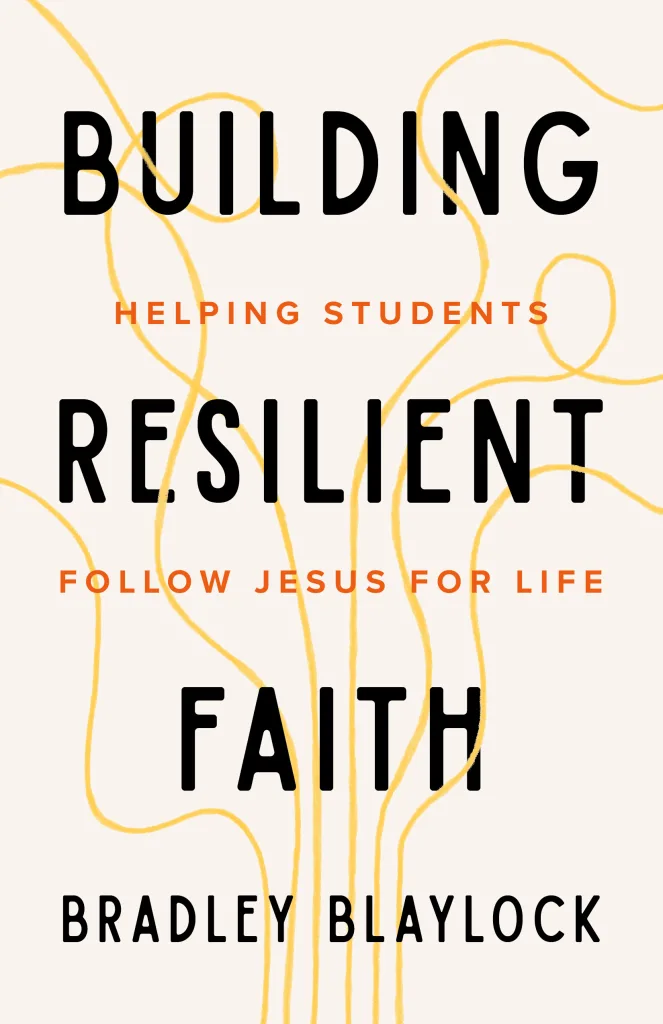
For more equipping on the topic of students’ hard questions, watch for Bradley’s upcoming book release: Building Resilient Faith: Helping Students Follow Jesus for Life, published by New Growth Press in partnership with Rooted. Pre-orders coming soon.