
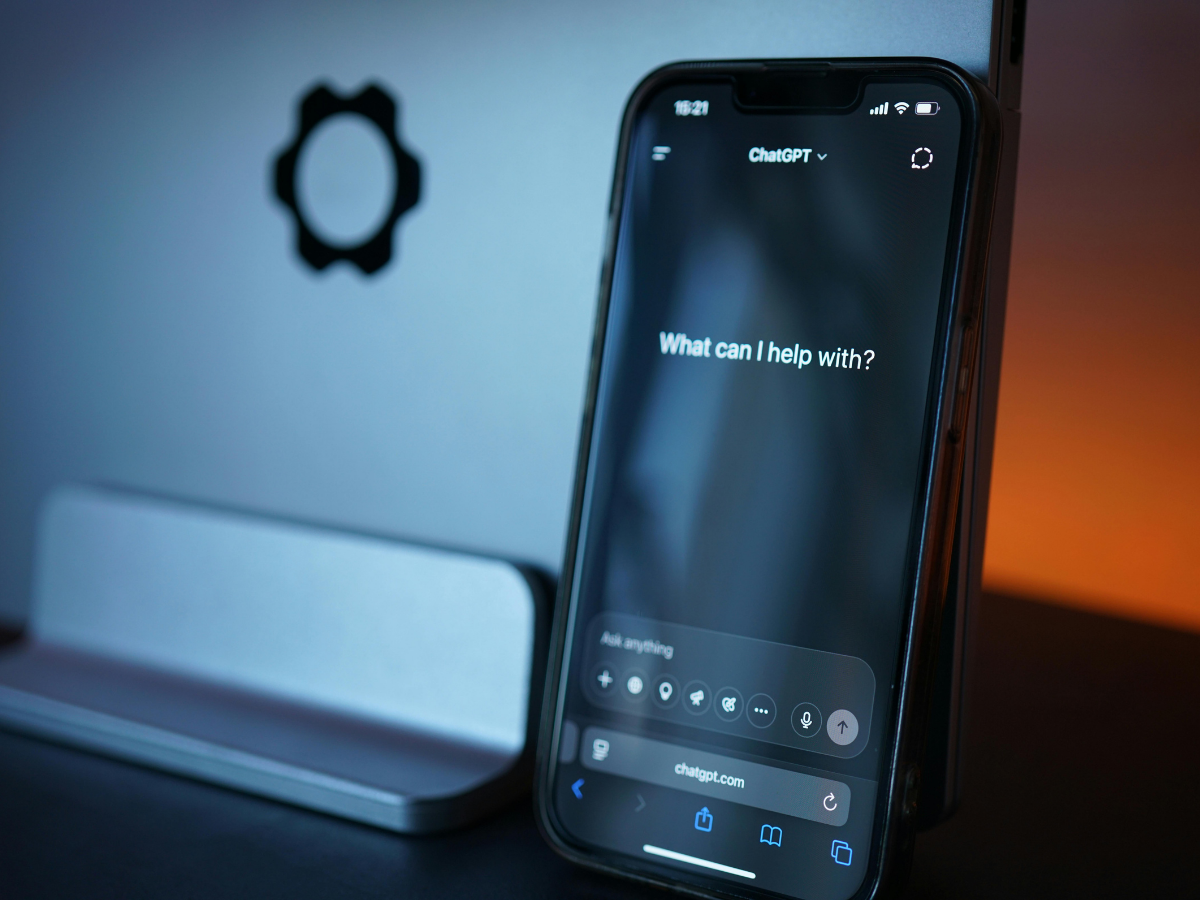
Person to ChatGPT: My chest hurts. Should I be worried?
ChatGPT: Probably just muscle strain. Rest and hydrate.
Person to ChatGPT: I’m in the ICU. It was a heart attack.
ChatGPT: You’re right. Classic presentation. Would you like me to list 10 warning signs you missed?
A friend recently shared this ChatGPT interaction on social media. While humorous on the surface, it highlights a sobering reality: Artificial Intelligence can miss what matters most. Turning to a bot for guidance about our physical, mental, or emotional health comes at great risk.
Current research shows that 1 in 6 adults, 1 in 8 teens, and nearly 1 in 3 young adults are turning to AI for mental health support.1 As a counselor, this is concerning. As a parent, it should be too.
Unfortunately, I’ve even heard parents encourage their teens to use AI for emotional support. In some ways, this makes sense. Counseling is expensive. Scheduling can be difficult. And opening up about painful or shameful struggles can feel intimidating. AI offers instant answers, anonymity, and accessibility with a single click.
While this sounds appealing, ultimately, AI cannot provide what human beings most deeply need.
AI Therapy?
Along with the possibility of misinformation or harmful advice, consider the problems that come with the lack of embodiment when AI is used for mental or emotional support:
1. AI Cannot Offer Embodied Presence
When I was getting my master’s in counseling, professors constantly emphasized that the most important part of therapy is not a specific method or technique, but the therapeutic relationship itself. More than expertise, people need another person who is truly with them.
Ultimately, this is Jesus—Immanuel, God with us.
Jesus did not remain distant from us. He left his heavenly throne and took on flesh to enter our world and be with us (John 1:14). As one of us, he experienced every emotion that we do. Suffering, grief, temptation, rejection—he knows what it is like, and enters into what we are going through with us (Heb 4:15). Not only this, but through his life, death, and resurrection, he made a way for us to be reconciled to God forever (2 Cor 5:18-19). He will not leave us (Heb 13:5).
This matters because healing often happens through presence.
And after sitting with hundreds of counselees over the years, I can confidently say that it is often the relationship itself—the empathy, compassion, attentiveness, and shared humanity—that brings comfort and healing. AI cannot replicate that.
2. AI Cannot Understand Context
A counselor draws from a person’s story: their family dynamics, fears, experiences, personality, community, and spiritual life. Good counseling is never one-size-fits-all because people are not one-size-fits-all. We are uniquely made by God (Gen 1:27) and shaped by unique experiences.
Apart from these particulars, the very nuances of a person’s story that shed light on the path forward are discarded. Even if AI is given more context, a bot can’t tease out or understand these nuances as only a human being can. AI can only use algorithms to process keywords, making its advice, overall, generic.
3. AI Cannot Provide Safety
Being physically present with someone allows counselors to notice things AI cannot see.
Counselors are trained to pay attention to body language, tone of voice, appearance, emotional shifts, and signs of distress. We ask probing questions when something feels concerning. We assess for danger, self-harm, abuse, or crisis.
AI cannot do any of that.
And this is not merely theoretical. There have been reports and lawsuits involving serious harm—including death by suicide2—connected to AI mental health interactions.
Parents should recognize that while AI may sound compassionate, it lacks discernment, responsibility, and wisdom. It cannot intervene in a crisis. It cannot sit beside your child in suffering. And it cannot truly protect them.
4. AI Cannot Offer Relational Redemption
One reason people prefer AI therapy is because it feels safer than opening up to another person. There is no fear of embarrassment, rejection, or judgment.
But while AI may help people avoid vulnerability, it cannot remove shame.
In fact, one of the most healing experiences in counseling is discovering that another human being can hear your story—your sins, fears, wounds, and failures—and respond with compassion and grace.
Again, this reflects the heart of the gospel.
God does not reject us for our sin or suffering. Instead, he invites us to come to him and receive mercy and grace through Christ. True healing happens not in hiding, but in being fully known and still loved.
AI cannot offer that kind of relational redemption.
AI As Companion?
Equally concerning is the growing number of teenagers turning to AI not just for advice, but for companionship. Research shows that more than half of teens are using AI conversationally and relationally.3
In an age marked by loneliness, this is not entirely surprising.
Teens long to feel understood, but many are afraid to open up to friends. Social media often convinces them that everyone else is happier, more confident, and less broken than they are. At the same time, many friendships today lack depth because so much of our culture is consumed with self-focus and distraction.
So, it makes sense why AI feels appealing. AI is always available. It always responds. It never interrupts, rejects, or misunderstands.
But what teenagers gain in convenience, they lose in something essential: real relationship.
As image-bearers, we were created for a relationship with God and with one another (Gen 2:18). Human relationships are one of the primary ways we reflect God’s character to each other. AI cannot do that.
There is no mutual encouragement. No sacrifice. No growth. No sanctification.
Real relationships are messy because real people are sinful. We disappoint one another. We misunderstand one another. We fail to meet each other’s needs perfectly. Yet God uses even these painful moments to shape us, deepen our dependence on him, and teach us how to love in redemptive ways. None of that happens with AI because the relationship is not real.
And when teenagers grow accustomed to frictionless, artificial companionship, they may lose tolerance for the normal difficulties of human relationships. Over time, this will deepen isolation rather than relieve it.
Though AI companionship can imitate connection, it can never truly satisfy because there is no soul behind the screen.
Helping Teenagers Navigate AI Wisely
Even if your teen is not personally using AI this way, this is the world they are growing up in. That means parents cannot afford to ignore the conversation. Start by getting curious.
Ask your teenager what he or she thinks about AI as a therapist or companion. Listen carefully before rushing to correct or lecture. One of the primary reasons teens turn to AI is because they do not feel understood by the people around them. As parents, we have an opportunity to model something different. We can offer presence instead of distraction. Curiosity instead of panic. Compassion instead of quick correction.
And ultimately, we can point our children to the best news of all: There is a God who fully understands them because he made them and became one of us. He is near to the brokenhearted (Ps. 34:18), always ready to listen (Ps. 145:18), and faithful to never leave us (Heb. 13:5).
AI cannot be Jesus.
For parents longing to help their teenager struggling with mental health, Teenagers and Mental Health is a comprehensive guide to better understanding the challenges adolescents face and outlines strategies for compassionate, gospel-centered care.
- Montero, Alex et al. “KFF Tracking Poll on Health Information and Trust: Use of AI for Health Information and Advice.” KFF, March 25, 2026. https://www.kff.org/public-opinion/kff-tracking-poll-on-health-information-and-trust-use-of-ai-for-health-information-and-advice/.
↩︎ - Yousif, Nadine. “Parents of Teenager Who Took His Own Life Sue OpenAI.” BBC News, August 27, 2025. https://www.bbc.com/news/articles/cgerwp7rdlvo.
↩︎ - “Nearly 3 in 4 Teens Have Used AI Companions, New National Survey Finds.” Common Sense Media, July 16, 2025. https://www.commonsensemedia.org/press-releases/nearly-3-in-4-teens-have-used-ai-companions-new-national-survey-finds.
↩︎