
Scripture speaks much to the topic of waiting. I think of the Israelites’ wandering, the Psalms, the 400 years of silence, the Gospels, the writings of Peter and Paul. They all point to a Messiah coming, came, coming again. I think of my own recent seasons of waiting. All of them, ultimately, were waiting on God: to heal, to restore, to recover, to bless, to give and take away and give again.
Some seasons were painful, like recovering from the miscarriage of our first baby. Those were tumultuous months, with the ever-constant why, God? echoing in my head, the hurling of a cosmic et tu, Brute? In the tension of still loving a baby now gone, of still loving a God who let it happen, we waited.
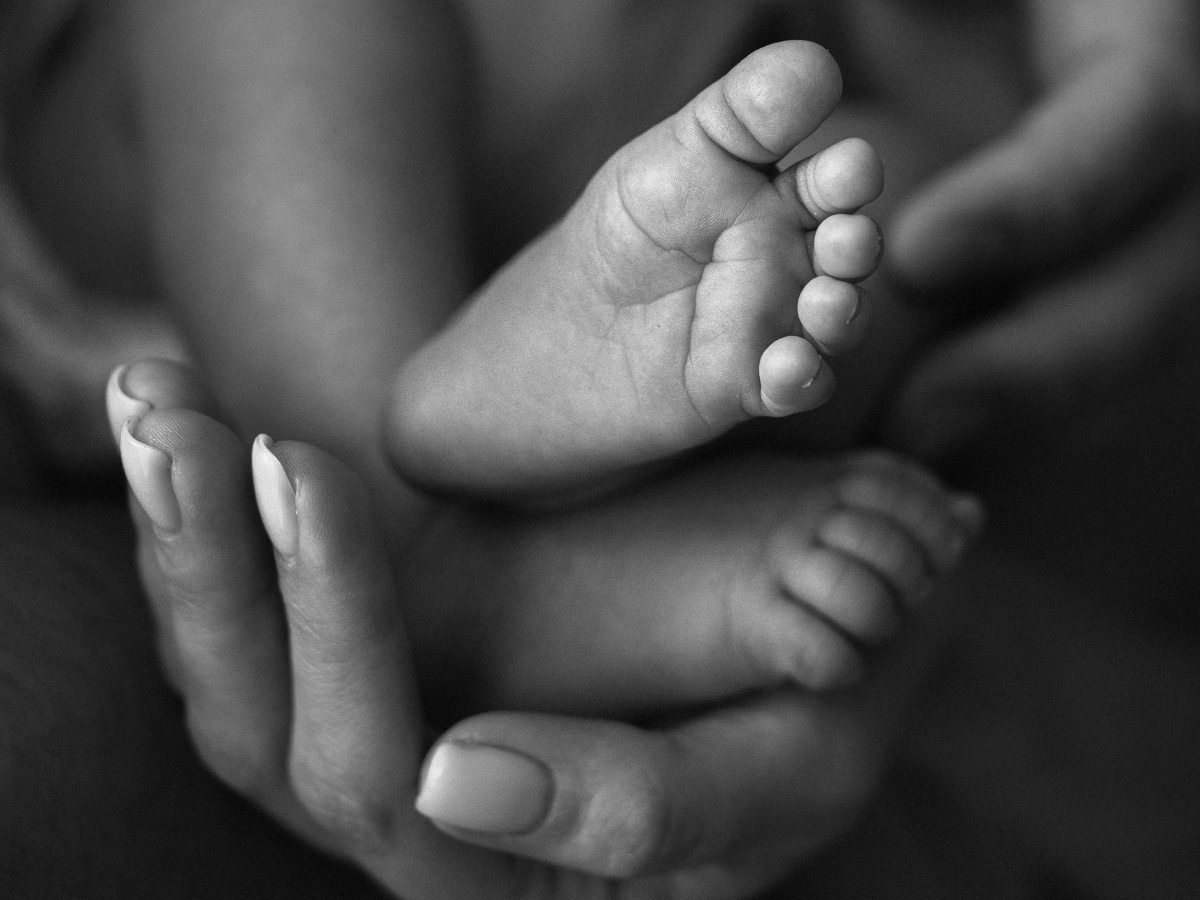
Some seasons were (are) sweet: like now, waiting on the birth of our second baby. As I write this, the due date is two weeks away. The last nine months of pregnancy have taught me new lessons on waiting, on parenting, on Christ. May these reflections from the cusp of parenthood encourage you, fellow parents, wherever you are on your journey: whether you’re waiting for a baby, for a birth, or are in the various trenches further on down the road.
Pregnancy, or Pre-Parenthood Parenthood
It is a curious phrase: You’re going to be a mom! Over the last nine months, I’ve often heard some variation of it. Are you excited to be a mom? Do you feel ready to be a mom? Are you nervous about being a mom? The language “going to/to be” inherently implies a future reality, not a present one. Especially post-miscarriage, and again during this pregnancy, I’ve wondered about the legitimacy of this choice of grammar tense.
Scripture tells us in Psalm 139:13 that the Lord “forms our inward parts and knits us together in our mother’s womb.” I think too, of Mary and Elizabeth’s interaction in Luke 1:41-45:
And when Elizabeth heard the greeting of Mary, the baby leaped in her womb. And Elizabeth was filled with the Holy Spirit, and she exclaimed with a loud cry, “Blessed are you among women, and blessed is the fruit of your womb! And why is this granted to me that the mother of my Lord should come to me? For behold, when the sound of your greeting came to my ears, the baby in my womb leaped for joy. And blessed is she who believed that there would be a fulfillment of what was spoken to her from the Lord.”
I’ve come to realize that Scripture does not teach that parenthood begins when your baby is born; instead, parenthood begins when he or she is conceived. Over the last nine months, my prayers and decisions have been shaped by the growing life within. What I eat and drink, or don’t. How and what I pray. The trust I must choose, again and again, to lay down not just my life, but also my baby’s, at the Lord’s feet. The movements I feel and the resulting joy. Quieter days and the pinch of anxiety. The complete lack of control, and yet the desire to steward this gift wisely and well.
I was chatting with a friend about all of the above, and she reminded me that this already is parenthood: The desire to love your child well, unto the Lord, balanced with the tension of fully entrusting them to his care. Pregnancy is parenthood, not a mere prequel; a preparatory ground for the life within, the life together to come.
Here I Raise My Ebenezer
Of course, such a concept is not unique to pregnancy. It’s not even unique to parenthood. As aforementioned, this waiting and watching and stewarding and beholding and becoming is the mark of the Christian life. We see it in different seasons, in different ways.
At our wedding, my husband and I sang the old hymn “Come Thou Fount” alongside those gathered to witness our union. Little did we know it then, but the lyrics would aptly describe much of our marriage in the months and years to come, especially the second verse:
“Here I raise my Ebenezer;
hither by thy help I’m come;
and I hope, by thy good pleasure,
safely to arrive at home.
Jesus sought me when a stranger,
wandering from the fold of God;
he, to rescue me from danger,
interposed his precious blood.”
The Hebrew word for “Ebenezer,” as outlined in 1 Samuel 7:12, is translated as “a stone of help:” a dedication/memorial of God’s divine presence and aid. In many ways, this article serves as an Ebenezer in our walk with the Lord. He’s brought us this far since we were first wed on that hot August day. He brought us through the dark days following the loss of our first baby. And now, he’s brought us through the sweet days, the hard days, and all the days in between of the last nine months of pregnancy.
We know this waiting is just the beginning. Parenthood, I’m sure, will reveal weaknesses and needs and joys and challenges we have yet to grasp, even conceptually. Thankfully, the song, mirroring the Grand Narrative of Scripture, goes on: hither by his help we’ve come, and we hope by his good pleasure safely to arrive at home (heaven).
Now And Not Yet
The only way this arrival is possible is through Christ’s “interposed, precious blood.” If pregnancy has taught me anything about parenthood, and this cusp of parenthood has taught me anything about anything, it is this: the gospel is more beautiful, more wonderful than I could ever imagine. God chose me and my husband, sinful people, to come into the fold of his heavenly family. He chose us to welcome our little girl into our earthly family.
So, here I raise my Ebenezer: by God’s grace, we will teach our daughter about who he is. We will spend time in the Word, in prayer with her. We will point her over and over to the sufficiency of Christ in our suffering and in our joy. Like Paul, we will rejoice even in our inevitable weakness as parents, knowing that God’s grace is sufficient, his power is perfect (2 Cor. 12:9).
We will trust that he who calls us—to pregnancy, to parenting, to waiting—is faithful (1 Thess. 5:24). He will complete the good work he begins in us (Phil. 1:6) and in our daughter as we walk in the now, but not yet: pregnancy and parenthood, in this age, and the age to come.
For more encouragement in gospel-centered parenting, join us for the Rooted Parent Podcast and the Asian American Parenting Podcast.