
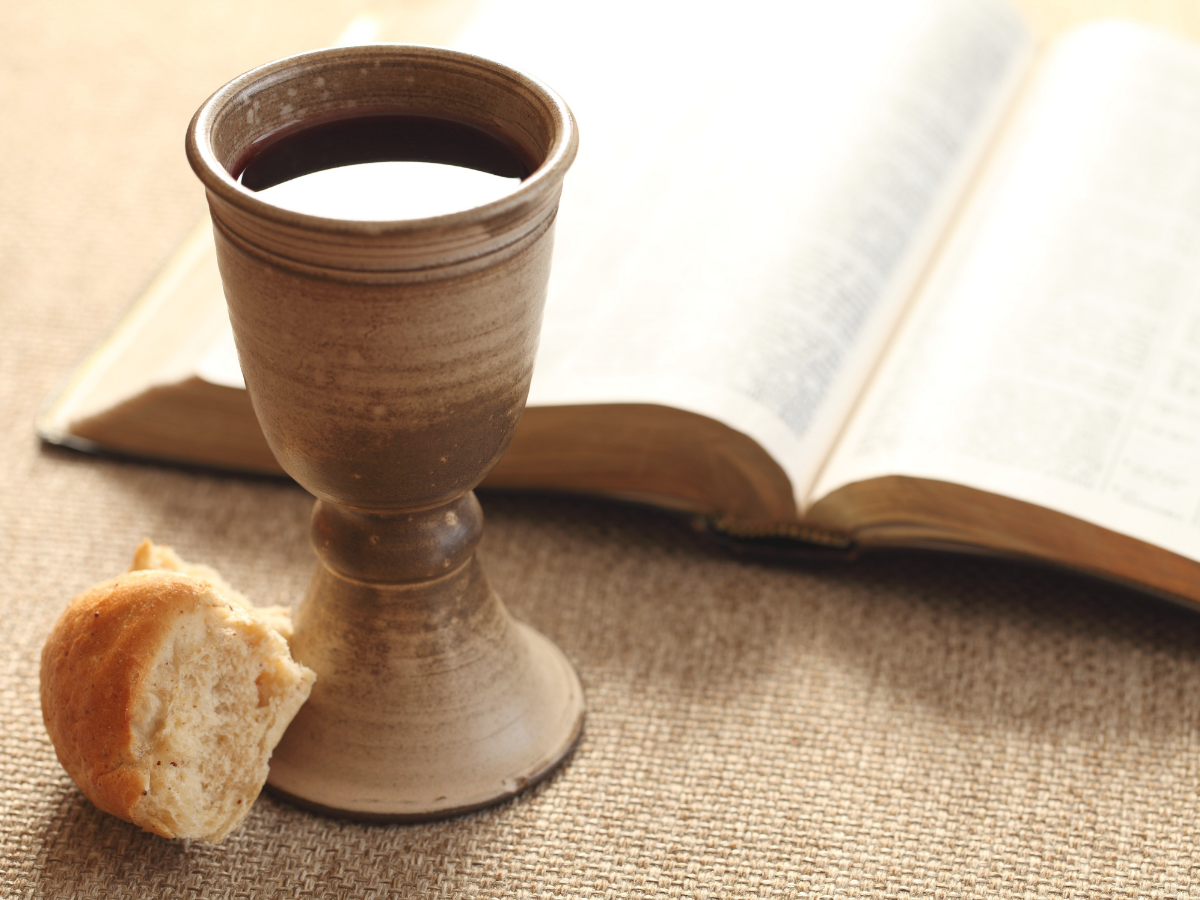
While the Lord’s Supper is a regular part of church life worldwide, different traditions and understandings have developed within the Church around the meal. Mike is writing within a Reformed Baptist framework, but we trust his reflections and insights will benefit readers from a wide variety of viewpoints. For more on this topic, see our two-part series: “Two Views on Teaching Teenagers About Baptism and Communion,” Part I and Part II.
It’s that moment in the service when the Lord’s Supper is celebrated. You look around the room, and you see students in your youth group starting to zone out. Zoe is checking her Snapchat notifications, Tim’s mind is probably drifting to unfinished homework, and Danny appears to be falling asleep. It’s clear that many of your students don’t think this part of the service is for them.
Yet the Lord’s Supper is meant to invite every student—believer and non-believer alike—to reflect on the gospel. This is a meal, not just for adults, but for students too. As youth leaders, helping students understand this meal can transform a passive moment into a spiritually life-giving experience.
The Lord’s Supper isn’t an empty ritual—it’s a meal the Spirit uses to strengthen faith by focusing our hearts on three vital dimensions: the past, the present, and the future. Let’s explore each of these and consider how we can help our students see Christ more clearly through them.
Reflecting on the Past: Remembering Christ’s Sacrifice
First, the Lord’s Supper strengthens faith by helping students look back.
Paul writes: For I received from the Lord what I also delivered to you, that the Lord Jesus on the night when he was betrayed took bread, and when he had given thanks, he broke it, and said, “This is my body, which is for you. Do this in remembrance of me.” In the same way also he took the cup, after supper, saying, “This cup is the new covenant in my blood. Do this, as often as you drink it, in remembrance of me.” (1 Cor. 11:23-25)
The bread symbolizes his body, the cup his blood, and both point back to something monumental: Jesus gave himself for the sins of his people. Adoption into God’s family, forgiveness of sin, freedom from guilt, reconciliation with God, eternal life—all of it was secured by his death on the cross.
But students often suffer from what we might call spiritual amnesia: forgetting who they are in Christ. The Lord’s Supper helps them remember. When they take the bread and the cup, they’re reminded—through sight, taste, smell, and touch—“I am God’s child. My sins are forgiven. Christ died for me.”
For students who haven’t yet trusted in Christ, the Lord’s Supper communicates a sober message. It’s a reminder that the promises of God belong to those who feast on Jesus by faith—trusting in his death and resurrection to save them. Until students do that, the benefits of his saving work don’t apply to them. But the meal also carries good news—reminding teenagers that Christ has accomplished salvation for sinners and that they are invited to come, take their place at his Table, and feast on him by faith.
Reflecting on the Present: Communion With Christ and One Another
The Lord’s Supper also strengthens faith by turning our students’ gaze to the present. Meals are never just about food—they’re about fellowship.
Communion with Christ
“The cup of blessing that we bless, is it not a participation in the blood of Christ? The bread that we break, is it not a participation in the body of Christ?” (1 Cor. 10:16)
The Greek word for “participation” carries with it the sense of communion or fellowship. Think of it like this: Imagine I invited you over to my home for a meal, but I didn’t show up. That would be weird, right? A meal presupposes the presence of the host.
When students take the bread and cup in faith, they are communing with Christ—spiritually experiencing his presence even though he is physically in heaven. For much of their week, Christ might feel distant. But the Table reminds them that he is near, offering fellowship and nourishment to their souls.
Communion with One Another
“Because there is one bread, we who are many are one body, for we all partake of the one bread.” (1 Cor. 10:17)
At the Table, those in Christ experience fellowship not only with the Lord but with each other. During the week, your students live in a world divided by sin. Yet at the Table, they’re reminded that what unites them with their brothers and sisters isn’t politics, personality, or popularity—it’s Christ alone.
Many students feel lonely and isolated—longing for friendship and the presence of others. Help them see that the Lord’s Supper is the family meal where they always belong.
For unbelieving students, watching others partake should be sobering. It’s a visible reminder that they remain outside of this fellowship until they come to Christ. But that sobering reality is also an invitation—to trust in Christ and find their seat at the family table.
Reflecting on the Future: The Hope of Christ’s Return
Finally, the Lord’s Supper strengthens faith by pointing students forward.
Jesus tells the disciples, “I will not drink of the fruit of the vine until the kingdom of God comes” (Luke 22:18). In other words, he anticipates a future feast—the messianic banquet—when all things will be made new.
Isaiah 25:6–9 paints this stunning picture:“On this mountain the Lord of hosts will make for all peoples a feast of rich food, a feast of well-aged wine… He will swallow up death forever, and the Lord God will wipe away tears from all faces.”
This is the feast we’re waiting for—the marriage supper of the Lamb (Rev. 19:9).
For students who don’t yet believe, this future dimension challenges them to consider eternity. We can teach them that the Lord’s Supper is a foretaste of what is promised to God’s people. Yet, if they remain outside of Christ, they miss out on the joy, fellowship, and eternal life this feast represents. Yet the banquet is not full. There are still seats open, and it is our privilege to beckon our students to come in by faith, that Jesus’ house may be filled (Luke 14:15–24).
For students who believe, this forward-looking perspective brings hope. No matter how hard their week has been—no matter what temptations or discouragements they’ve faced—they can come to the Table and be reminded: my best day is still ahead of me.
That’s why Paul concludes, “For as often as you eat this bread and drink the cup, you proclaim the Lord’s death until he comes.” (1 Cor. 11:26)
When Christ returns, we’ll no longer need these tangible reminders, because we’ll see him face to face. Until then, we keep eating and drinking in faith—proclaiming his death, enjoying his presence, and anticipating his return.
Looking for more practical advice and biblical encouragement in youth ministry? We hope you’ll join us for the Rooted Conference in Nashville, October 22-24, 2026.