
Disclaimer: Neither Rooted nor the author recommends that teenagers watch the horror movies discussed in this article, nor the horror genre in general.
For many Christians, there is a stigma around watching horror films. It’s fairly easy to see why. Horror is filled with violence, demons, ghosts, ghouls, and unfiltered evil. It’s commonplace to see spirits possessing unwitting victims, ghosts haunting the innocent, and much more. Because of this, some Christians feel a sense of revulsion or even a conviction to abstain from watching horror altogether.
Christians should follow their convictions. If someone feels convicted to avoid the horror genre, then by all means, they should. But horror is a popular movie genre, especially amongst teenagers. It keeps growing in popularity too, as seen by the recent success of films like Obsession, Hereditary, and Backrooms.
I would never seek to convince parents to let their teenagers watch horror, nor defend the genre as a whole. But as horror’s popularity among younger generations grows, it offers us inroads to have meaningful conversations about spiritual realities. Your teenagers may not be watching horror, but statistics show that their friends probably are. Whether you’re discussing what’s in the culture with your own teenagers or getting the chance to talk with their friends, I believe that horror as a genre allows us to talk with teenagers about its most common themes like spiritual warfare, objective evil, and the supernatural world.
Horror and the Christian Worldview
Horror often presents a worldview that sounds shockingly Christian. In fact, horror, in my estimation, is the genre that often takes Christianity most seriously. This is especially true in supernatural-themed horror. Any movie about possession or haunting concedes that the spiritual world really exists. It is willing to recognize that not all is as it seems. The material realm is not the only real realm, nor the only one we interact with. Our modern world often minimizes evil or excuses it. But horror causes teenagers to reckon with the presence of evil in the world. It asks the question: “Is there something more than human badness at work here?”
Of course, Christianity’s answer to this question harkens all the way back to creation. After creating the world, God looked upon it and declared that it is good. This means evil has no independent existence apart from God. Evil corrupts what God made good. It is active when free creatures decide to turn away from the good that God has made and misuse what he has given us.
Satan is one of the clearest examples in Scripture. Satan is a spiritual being who has rebelled against God and now seeks the ruin of God’s good creation. In the garden we see how he attempts to carry out this mission. He sows seeds of distrust in God, seizes power, and recruits others in the rebellion against God’s goodness (Gen. 3:1-5).
Evil works by twisting what God has made. These fundamental realities about evil form the central themes of many horror films. Evil really exists; it twists God’s good creation. There is more than our material world, and we are engaged in spiritual warfare.
The Presence of True Evil
The original Halloween movie understands this really well. John Carpenter offers no such explanation for the evil of Michael Myers. In fact, in the screenplay for Halloween, Myers is referred to simply as “the shape” because he only vaguely resembles the shape of a human while being devoid of any light within. Because Myers is purely evil, there is no way to understand him, nor discern his next action. He is simply destruction incarnate. Carpenter has described him as “pure evil moving on the wind.”
Seeing Myers as clearly evil commits the audience to some vision of good. We can only recognize evil as evil when it’s contrasted with goodness. Good horror, then, commits itself to the idea of objective goodness. By staring into the darkness long enough, we recognize that we can only see the darkness because the presence of light allows us to.
Horror gives us the opportunity to have conversations with teenagers about how evil affects our world. Evil comes for us all. Like Carpenter’s Michael Myers, we can’t predict our suffering through any discernible pattern, but it will come. None of us are outside the struggle against darkness. Horror then externalizes this struggle we face. Though it often takes evil a step further.
Evil is not always presented as a vague darkness inside the human heart; sometimes it’s supernatural. Yes, evil comes for us all. And yes, horror reflects this reality. But as Christians, we have hope! We look forward to the day when evil and suffering will cease. Even when we cannot understand why we are suffering evil, we can know that God is still in control.
Real Spiritual Warfare
Toward the climax of the movie The Exorcist, a character named Father Merrin performs a heroic act. Regan, a twelve-year-old girl caught in a terrifying circumstance, is trapped in her bedroom, demon-possessed. Father Merrin leads the fight against the evil entity controlling her. He is fully aware that this fight may, in fact, kill him. Merrin is already in poor health due to a weak heart. Despite this, Merrin goes in. In the film, other characters try their hardest to explain what is happening to Regan through natural means. Merrin, however, fully understands that this is a spiritual battle.
We can learn a lot from Merrin, particularly from how he fights. When Merrin goes into the bedroom, he turns to the tried-and-true methods of his church. He prays in Latin. The film presents these prayers as real, having real power to affect the world and fight evil. In The Exorcist, the demon is real, but so too is the God of Father Merrin. Merrin enters the bedroom fully prepared for the fight not because he is physically strong—he is not—but because he believes in a powerful God. Merrin knows the enemy, and he trusts the truth handed down to him through his church.
A lot of modern, non-horror storytelling would attempt to make sure the audience knows the exorcism is only symbolic. The demon would be a metaphor for PTSD or something of the like. That is not the case in The Exorcist. In fact, the film explores this contrast in depth. Reagan sees various doctors who try and fail to diagnose the issue. There’s no attempt to rationalize the demon away precisely because the demon is real. The film doesn’t wink at the viewer, as if Father Merrin’s prayers are silly, because in horror, they aren’t. Evil isn’t explained away as the awakening of childhood trauma; it’s just evil.
While the modern mind can easily dismiss this notion, horror does not. Mind you, this is not to say that every horror movie takes Christianity seriously. But horror, by and large, is a genre where evil is real and human strength is not enough to combat the forces of darkness.
Again, this gives us a wonderful opportunity to talk with teenagers about how we engage in spiritual warfare. Paul rightly locates the Christian battle not in the physical realm, but in the spiritual one; we wage war against the principalities, powers, and spiritual forces of evil (Eph. 6:12). Yes, of course human beings can and do carry out vile acts. They can harm us tremendously. Still, the final enemy is never another image bearer. Rather, human participation in evil occurs within the broader war of unseen beings who want to ruin all creation.
The armor Paul tells us to fight with matches the reality that we face a spiritual battle. The Christian carries into war truth, righteousness, faith, salvation, the gospel of peace, Scripture, and prayer (Eph. 6:13-19). These weapons and armor would do little against a physical opponent, but make complete sense in a spiritual battle. Horror takes this battle seriously.
Evil Twists and Distorts Good
The horror genre is rife with spirits, demons, monsters, and other invisible enemies who seek to twist and ruin what is good. One example of evil twisting God’s good design is in Curry Barker’s movie, Obsession.
In Obsession, one of the main characters, Bear, wants to be loved. The desire to be loved is natural and good! But this desire is corrupted when Bear decides his desire for Nikki, a woman he’s obsessed with, matters more than her freedom.
Instead of risking rejection by Nikki, Bear opts to use “the One Wish Willow” to force Nikki to love him. The wish works, and Nikki becomes obsessed with Bear. It gives Bear a corrupted version of love. From a distance, Nikki appears to love Bear, but the movie makes it clear that Nikki’s obsession with Bear is against her will. She is no longer free or, in any meaningful sense, herself. Nikki’s affection hardens into jealousy and control, eventually becoming violent. Bear perverted a legitimate desire and, through the wish, opened Nikki up to possession. Evil takes his desire, bends it, and corrupts it until it bears little resemblance to the good it originated from.
Bear’s mistake should look familiar to Christians, especially teenagers. We rarely desire something wholly evil. Typically, even our sinful acts have kernels of the good desires the Lord has created us for. But we so often pursue good on our terms instead of God’s. Even at the expense of other people.
When horror shows the possibility of supernatural entities, it gives us a glimpse into the world the movie’s characters live in. If spiritual powers can act on the material world, then there is no such thing as spiritual neutrality. The supernatural can and does intrude on the mundane. This is how horror reenchants the world.
Horror Re-Enchants the World
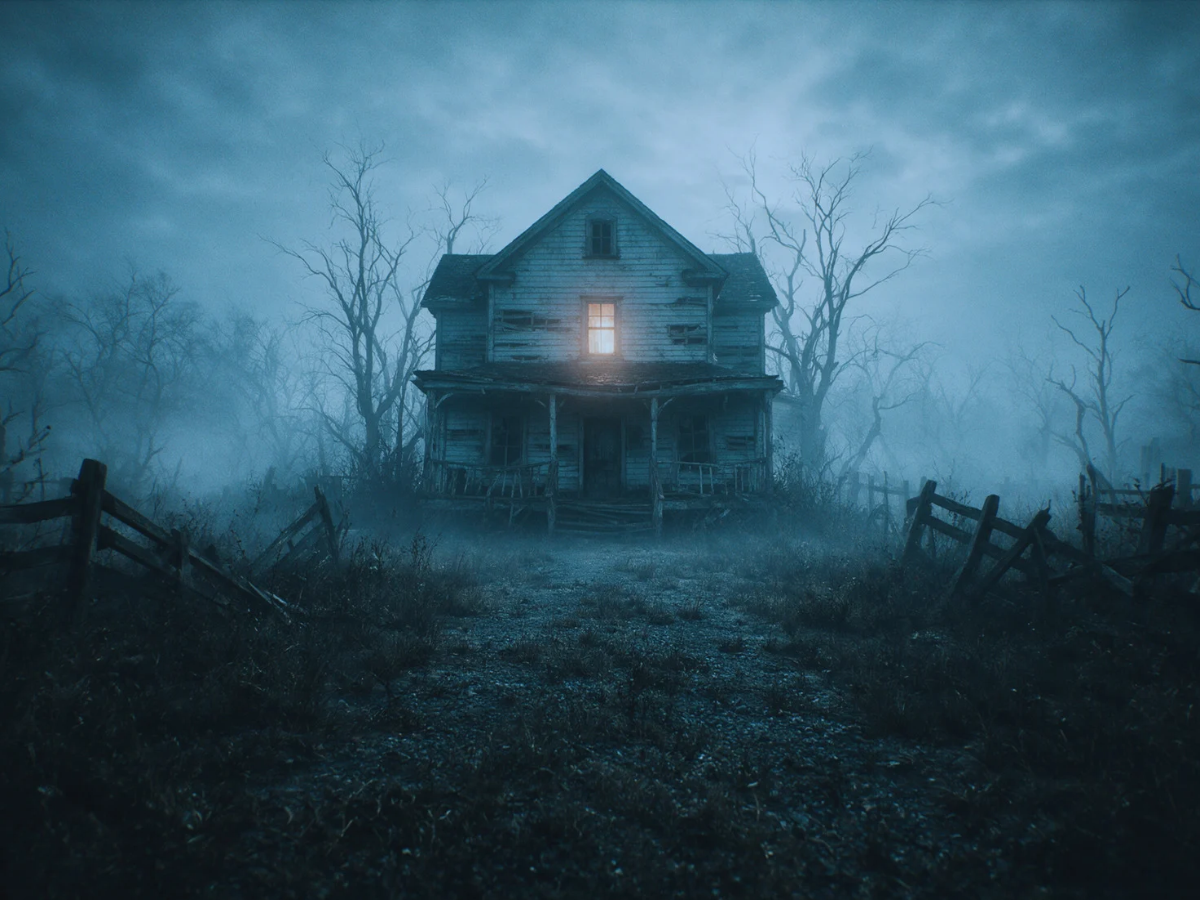
Once a horror film assumes that the supernatural exists, ordinary things begin to matter more. The line between the transcendent and the material thins. A house is no longer simply building materials; it’s the site of a spiritual battle. A body is more than carbon and atoms; it can be a vessel for good or for evil. Even mundane objects can carry spiritual significance. Matter matters because it isn’t just matter.
We largely live in a disenchanted world. Many people believe that something’s material makeup is all there is. Horror, on the other hand, is decidedly enchanted. Gore Verbinski’s The Ring demonstrates this. The film’s plot centers around a cursed videotape. Rachel, the main character, watches a VHS tape, and through this material object, a curse enters her and her son’s lives.
The tape in The Ring is enchanted because, in horror, there is no divide between the spiritual and the material. The line between the two realms thins to the point where they collide and interact. Because of this, ordinary and mundane things can carry great weight in horror movies. Surprisingly to some people, this makes horror more aligned with a Christian worldview in a certain sense.
When teenagers watch a horror movie, such as The Ring, for a short period of time, they leave our disenchanted secular society and enter into an enchanted world. This can help us have real conversations with teenagers, whether they are watching the movies themselves or just hearing about what’s in the culture around them. We can talk about the materialism of our day and how the spiritual and material world are actually intertwined. Things matter because they are more than just matter. Horror can actually restore the supernatural worldview.
Conclusion
Horror is right that evil is real. Horror depicts the worst impulses of our hearts as well as powers and principalities that seek to corrupt and destroy us. As Christians, these themes can help us talk with teenagers, even unbelieving ones, about the reality of the world we live in.
For the Christian, evil invades a world that God made good. Christianity tells us why horror has this impulse; sin has corrupted us as well. Horror correctly tells us that there are forces of darkness seeking our destruction and that we are not enough to overpower evil. Like the characters being chased by Michael Myers, we are not enough on our own. Scripture assures us that though there are foes, their utter defeat is certain because the God who made the world has acted through Jesus within it to rescue sinners and defeat all the forces of darkness and evil.
Bradley Blaylock’s book, Building Resilient Faith: Helping Students Follow Jesus for Life, is a guide for youth pastors and ministry leaders who want to help students develop a strong, enduring, Christ-centered faith that can withstand doubt, cultural pressure, conflicting worldviews, emotional challenges, and life’s inevitable storms.