
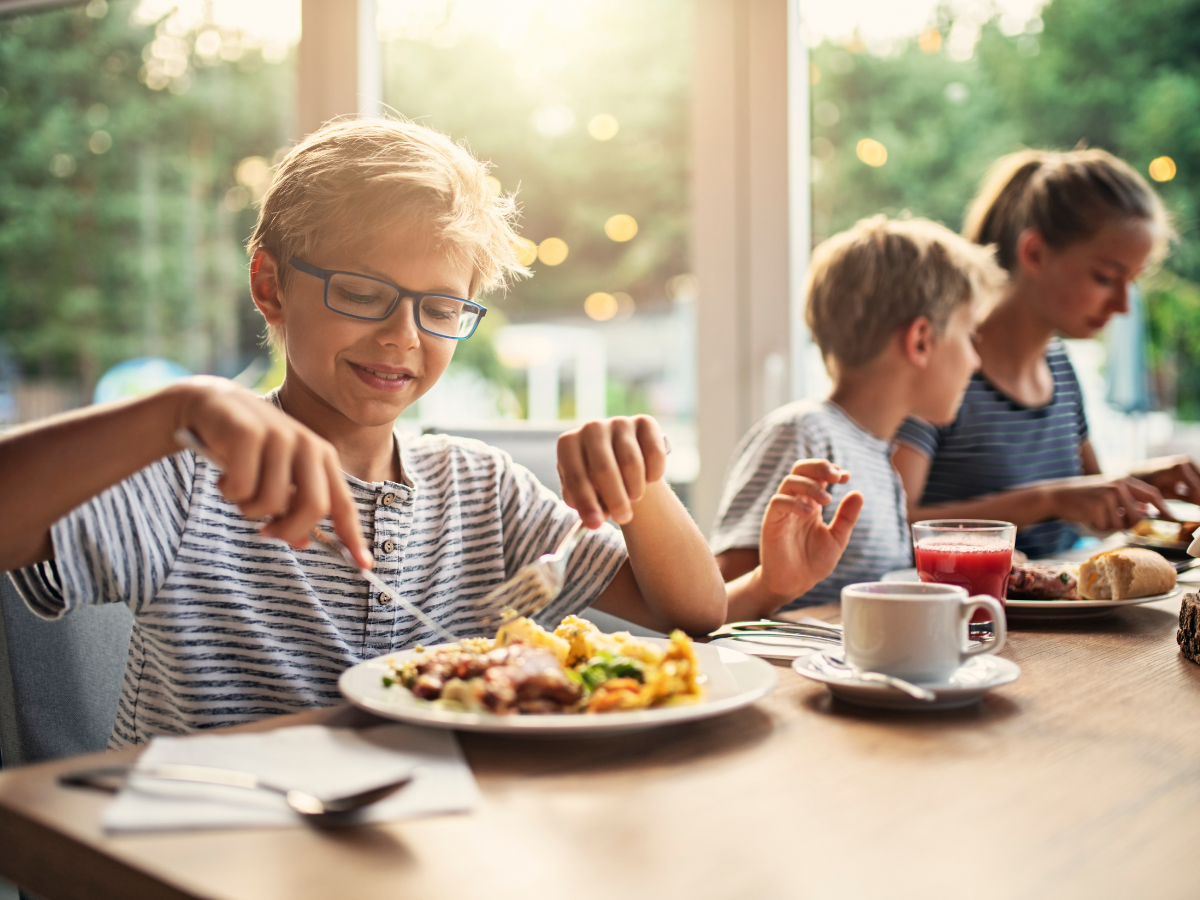
I heard the familiar beeps of the front door lock, and I knew it was my youngest. I called out from the kitchen that dinner was ready. She replied,
“Be right there!”
That was followed by, “Hey, Mrs. Polski,” from a second voice, and then, “Hi, Mrs. Polski!” from yet a third voice.
“Oh, yeah, Mom. Two more for dinner,” my daughter said nonchalantly.
I looked at the table set for three and glanced at my husband. Without a word, he grabbed two more plates while I heated another pan of food.
I wouldn’t describe myself as naturally flexible. Over time, though, I’ve learned to see interruptions differently. Some of the richest moments of hospitality begin as disruptions, especially when it comes to teenagers.
Practicing hospitality to teenagers isn’t merely about opening a clean home or putting together a spectacular meal. It definitely isn’t about advanced notice and RSVPS. Hospitality to teenagers is about creating a place where they know they are welcomed, and where they feel like they belong.
Hospitality begins before the teens arrive.
I used to think that hospitality started when a friend (or stranger) stepped into my home. But I’ve learned that hospitality takes practice, preparedness, and prayer. I spent a long time working through being okay with interruption. I started by asking for forgiveness when I was short-tempered about unannounced guests, and it continued with prayer, asking God to give me patience and love toward those who enter my home.
For others, hospitality starts with simple forethought. If you’re purchasing a couple of frozen pizzas for your family, get into the habit of getting just one more. Or make sure the extra bed has clean sheets just in case a friend comes over.
The point is that creating a place where teens feel welcomed begins long before they ever walk through the front door. Think about what you can do now that reinforces to your teen’s friend, you belong, and you are welcome here.
Hospitality allows teens to be teens.
When teenagers do come over, you get to practice the art of hospitality—and it’s surely an art with teens, not a science. Every home is different and every personality unique, so creating a comfortable space is a lot about your family just being your family. There is no need to put on the “we have it together” show for teenagers.
One of my girls’ friends happened to be over when our family had a bit of a tense conversation about college. Several minutes into the conversation, I apologized to our guest, and you know what she said? “Don’t worry about it, Mrs. Polski. It actually makes me feel like I’m a part of the family.”
That moment reminded me that teens aren’t looking for perfect homes—they’re looking for places where they can exhale and be themselves.
And sometimes allowing teens to be teens means relaxing standards… just a bit.
I’m not saying, “no rules.” That is never a good thing. There have been groups over in the past who got too rowdy, and I had to tell our teenager that we needed to have a heart-to-heart with them about rules and expectations.
So, it doesn’t mean abandoning expectations. It means remembering that teens are still learning. Think of it as choosing people over perfection. There will be piles of “stuff” in places you don’t want it; in the summertime, you’re going to have a bunch of wet towels to contend with. And I guarantee there’ll be an occasional half-empty pizza box in the basement, and someone will eventually come in with muddy shoes.
Here’s the thing. This is a season. It goes fast (and I’m saying that with this season in my rearview). Looking back, you will remember the spontaneous conversations and laughter more than you would remember spotless floors. Feeling “at home” in allowing teens to be teens is a way to say to them, you belong, and we welcome you here.
Hospitality is sometimes PB&J or frozen pizza.
My oldest offered our home for the cast parties after her school plays. When she first approached me about this, I assumed she meant a couple of friends. Upon discovering it was the entire cast, I panicked…because, well, food.
Some moms create beautiful charcuterie boards and bake homemade cupcakes. Friends, I am not one of those moms.
But I’ve learned that a frozen pizza offered with joy says “welcome” just as loudly as a homemade meal. It doesn’t need to be fancy. The spread for the cast party was the most basic food, and by the end of the night, they ate all of it—and they appreciated all of it.
Because food is a way to say to teens, you belong, and you are welcomed here, I have learned to have an open fridge policy. This took me time, but when I say to one of my teenager’s friends: “Help yourself,” I mean it. We’ve had a a few awkward moments of teens standing in front of the fridge, but the more you do this, the more comfortable they (and you) will be.
I learned that one of my teens’ friends loves egg bites. I discovered this because the box was disappearing quickly. When I asked which family member likes them, my daughter said, “Oh, mom. It’s none of us. Josie likes them.”
We always keep egg bites in the fridge now. And not just for us—but for Josie. She knows exactly where they’ll be.
In saying that, it’s not lost on me that groceries are expensive. So an “open fridge” policy can feel impossible for some. A couple of things to keep in mind.
First, hospitality isn’t the same thing as unlimited food. It’s okay to say to your teen, “Here are the snacks you can share.” And those snacks can be inexpensive ones—pretzels, boxed brownies, tortilla chips, etc. There have been times when I’ve said yes to kids coming over, but I’ve asked that they eat dinner first.
Second, think of it as an abundance of welcome rather than an abundance of “stuff.” It doesn’t need to be elaborate, mom and dad, but access to the kitchen, in some small way, is a significant way of saying, you belong, and we welcome you here.
Hospitality is about discipleship.
Hospitality isn’t simply about feeding teens.
And it’s also not a popularity contest. You are not a better or worse parent based on whether you have a revolving door with teens coming through.
For one of our kids, we were the social “hub.” We were not for the other. If you’re not the hub—you don’t need to artificially conspire to become that. But go out of your way to thank the parents who are the hub for your teenager’s group of friends.
What Christian hospitality is ultimately about is discipleship—it’s about opening our lives, not just our homes. We want our children to know that their friends matter, and we want their friends to know there is another family cheering them on.
I have never felt this more acutely than when my youngest graduated from high school. We had twelve guest tickets, and those guests included a couple of her friends… and their parents. These were families who cheered on our kid right alongside of us, who shared the love of Jesus, and who created a comfortable space. That is discipleship.
By God’s grace, you may be another trusted adult in a teenager’s life—someone to whom they are comfortable bringing their spiritual questions, or someone they know will pray for them.
And why do we do any of this? Because Jesus set the example for us to follow. He was regularly welcoming people who wondered if there was room for them. As a child of God, you have full confidence that you belong, and you are welcomed. Parents, our homes can become small echoes of that incredible welcome.
Sometimes the gospel is preached through words. Other times, it’s with an open Bible. And sometimes…well, sometimes the gospel is lived out through an open refrigerator —a small, everyday reminder that because Jesus has welcomed us, we can joyfully welcome others.
Looking for more resources as you disciple your kids? Check out Rooted’s new devotional God with You: A 52-Week Devotional Through the Whole Bible for Teenagers!