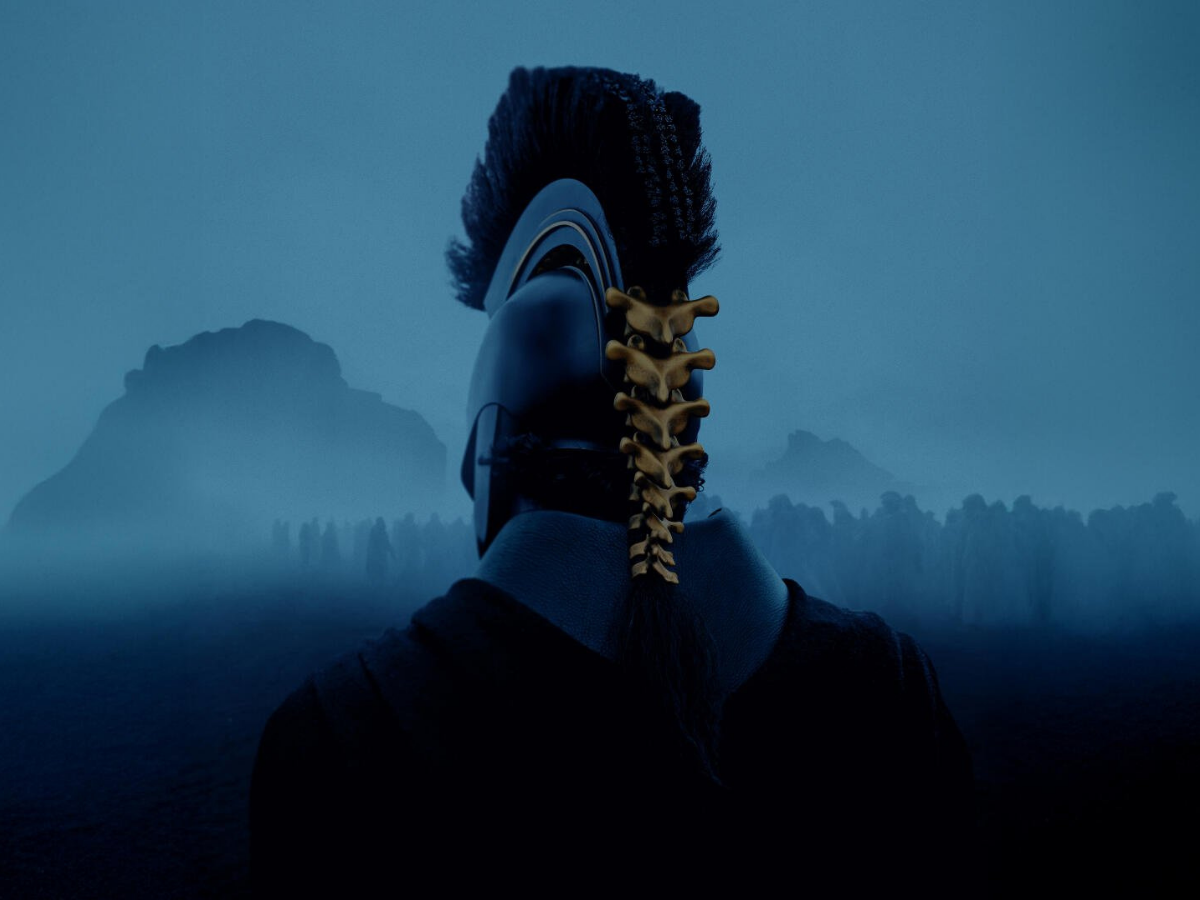
Christopher Nolan’s film, “The Odyssey,” will be remembered for years to come for a number of reasons. The film’s release feels like a cultural moment not seen since before the COVID lockdowns. The performances and sheer star power in the film are exceptional. Nolan’s masterful use of practical effects makes you feel as if you’re on the journey with Odysseus.
However, what I will always remember and appreciate is the film’s raw and honest portrayal of humanity’s fallen, sinful nature. Most memorably, it desperately longs for gospel solutions to life’s deepest pain and suffering.
Watching The Odyssey in the theaters felt eerily similar to what the apostle Paul must have felt observing the people in Athens worshipping an “unknown god.” The film’s characters clearly understand what it means to worship, to live selfless and sacrificial lives, and to live for something bigger than themselves. But they have misplaced and disordered worship. The gospel most certainly reminds us that whenever we have misplaced and disordered worship, it leads us further from flourishing and closer to death.
Witnessing Odysseus’s journey home forces us to consider and attempt to answer some deeply profound questions. They are some of the most important questions our young people face during a crucial stage of identity formation. What motivates our hospitality for strangers and love for our neighbors? To whom or where can we take our suffering to find comfort and relief? Perhaps the weightiest question the film forces us to confront is this: what is the purpose of sacrifice?
The Purpose of Sacrifice
The theme of sacrifice in “The Odyssey” takes on many forms. However, the most consequential and memorable sacrifice in the film comes when King Agamemnon sacrifices his own child. He does this, against his wife’s vehement protests, to satisfy the gods so they will grant him victory over his enemies. Odysseus delivers this hauntingly profound half-truth to explain Agamemnon’s sacrifice: “The power of the sacrifice is in the cost of the person making it.” In other words, Agamemnon believed his sacrifice to be powerful and sufficient for the gods because of how powerful and important he was.
This misplaced, disordered worship infects the answer to every other question the film confronts us with. Agamemnon may have sacrificed his child to the gods as an act of worship, but that act of worship was motivated by a deeper worship of self. Agamemnon believes himself to be so great and worthy that his sacrifice is sufficient to satisfy the gods.
What Agamemnon needed to hear and believe, and what we need to constantly proclaim to teenagers, is that our sacrifices to God do not change God’s mind or will. God will not be persuaded or even satisfied by our sacrifices in life—great or small. The only sacrifice that has ever satisfied the one true God is the sacrifice of his Son and our Savior, Jesus Christ.
“For by one sacrifice he [Jesus] has made perfect forever those who are being made holy” (Heb. 10:14). The only sacrifice that changes our standing before God or grants us favor in the eyes of God is the sacrifice of Jesus Christ on the cross to pay the penalty for our sins. This foundational gospel truth not only releases our young people from the performance anxiety of trying to impress or persuade God with sacrifice; it also provides a gospel lens through which we answer the film’s other pressing questions.
Hospitality for Strangers and Love for Neighbors
Odysseus and his family firmly hold to “Zeus’ Law” throughout the movie. Telemachus, Odysseus’ son, explains it early in the film: “Zeus’ law tells us to treat strangers as we would be treated because they might be gods in disguise.”
No doubt, Zeus’ Law bears a striking resemblance to Jesus’ words: “So in everything, do to others what you would have them do to you, for this sums up the Law and the Prophets” (Matt. 7:12). However, there are different motivating forces behind obedience to Zeus’ Law and Jesus’ words.
Zeus’ Law went by another name in Greek culture: xenia—the law of hospitality. This law came from the belief that Zeus himself was the divine protector of guests and strangers. It obliged everyone to welcome travelers and offer food, shelter, and protection before inquiring about their identity or purpose for traveling. Although Zeus’ Law looks like the Golden Rule, its motivations couldn’t be more fundamentally opposed.
Characters in the film uphold Zeus’ Law to avoid his wrath, maintain honor and reputation, and secure divine favor. Additionally, Zeus’s law was a reciprocal arrangement. Repayment or mutual benefit wasn’t a byproduct; it was expected. On closer examination, Zeus’ Law has more in common with the idea of cosmic karma than with Jesus’ teaching.
Unfortunately, the motivating force behind obedience to Zeus’ Law is still alive in the cultural zeitgeist of our young people today. They may offer hospitality to strangers, but often with a subconscious or explicit belief that they will gain something by offering this person hospitality, whether that’s good fortune, favor from God, or the feeling of being a ‘good person.’ They might think, “Offering hospitality to people I don’t know is a sacrifice to some degree; it costs me something. Surely, God will honor my sacrifice, won’t he?”
Scripture shows plenty of examples where the suffering we experience and the sacrifices we make for the kingdom do yield treasures in heaven. However, our sacrificial hospitality is not a way for us to bend God to our will or earn his favor. We treat others—strangers and neighbors—how we would want to be treated because God first loved us through Jesus. Our obedience to Jesus teaching in Matthew 7:12 forces us to consider Christ’s sacrifice above all else. Whereas obedience to Zeus’ Law would first consider what one is sacrificing in order to be faithful.
We “do unto others” as a response to what Jesus has already accomplished for us, not what Zeus, or any other false god, may or may not do for us. Only when they understand the primacy and sufficiency of Christ’s sacrifice for them can our students offer hospitality to strangers and love for our neighbors with a God-honoring motive.
Where do we take our suffering?
Odysseus is no stranger to suffering throughout the film. He fought in the war for 10 years only to experience another 10 years lost at sea before returning home. He slowly but surely lost all the men he loved and served with in each new encounter with the People of the Sea. Once all his men had been killed, we eventually see where Odysseus took his pain and suffering: to isolation and addiction.
Odysseus becomes shipwrecked on the island of Ogygia, where he meets the goddess Calypso. She brings the shipwrecked Odysseus into her home and feeds him the lotus flower for seven years. In the source material, Calypso feeds Odysseus the lotus flower to imprison his will. In Nolan’s adaptation, she gives Odysseus the lotus as a therapeutic mechanism to make him forget about all the painful memories of the Trojan War and his misfortunes at sea.
The lotus is powerfully effective at easing Odysseus’s pain and suffering. He becomes blissfully and willfully ignorant of his traumatic past. As Calypso helps Odysseus remember who he is and how he began to forget, she recalls when she first pulled him away from the water: “I gave you the lotus because it would ease your awakening, so that your pain would be more of the body than of the mind. You liked it so much, you ate it so willingly.”
What an accurate portrayal of what we do when we are suffering and in pain. We do whatever we can to run away from the pain in our minds. We quite literally run away from our problems if we have the opportunity. If we aren’t so fortunate to literally run away, we still attempt to run away from the pain by masking it with other things like substances, experiences, and distractions.
But here’s the problem: we run away from our pain and suffering, not because it makes the situation worse for us. Rather, when we run away from our pain and suffering or get lost in something to mask it or ignore it, it actually does bring us the temporary relief we seek. We run and mask because it works, but not forever.
After seven years of eating the lotus, Odysseus slowly but surely begins to remember not just who he is, but the pain and suffering he’s been running from. Calypso, who has now fallen in love with Odysseus, implores him: “Stop eating the lotus and tell me what you remember.” Calypso acknowledges the inevitable reality we all must face. When someone tries to run from or mask their pain, it doesn’t last. It won’t ultimately bring them the relief they’re looking for. When Odysseus refuses her request to stop eating the lotus, she delivers perhaps one of the most truthful lines of the entire film: “Forgetting isn’t freedom.”
Anyone familiar with trauma-informed ministry practices would tell a young person who is running from or masking pain and suffering the exact same thing. You can’t run from it, and you can’t ignore it. You may be able to mask it for a moment, but not forever. The only way to truly heal from our deepest pain and suffering is to face it head-on and confront it. Studies, research, and literature all suggest that one of the most effective ways to heal from trauma is to remember it. It’s to tell our life story accurately and truthfully—the good and the bad.
However, the safest, most reliable, most loving, most healing, and most transformative place we can bring our pain and suffering is the foot of the cross. Pain and suffering isolate us and convince us we are all alone. At the foot of the cross, as we consider the sacrifice of Jesus Christ, we find that we are not alone in our suffering. Jesus Christ has suffered for us and enters into the deepest pain and suffering in our lives to offer us new life and deliverance.
Come Home to Jesus
After Odysseus remembers who he is and begins the journey home, he fashions a raft out of his old ship and throws himself into the mercy of the ocean. Calypso reminds him, “You’re a man who likes to control his fate; you can’t control this. Give up the fight, give up the control to live. It’s a leap of faith you’ve never yet made.” Unlike Odysseus, we have a better option to turn to when we need to take our pain and suffering somewhere.
We don’t need to let the ocean take us wherever it may, but we do need to take a similar leap of faith into the arms of Jesus. He promises us, “Come to me, all you who are weary and burdened, and I will give you rest. Take my yoke upon you and learn from me, for I am gentle and humble in heart, and you will find rest for your souls. For my yoke is easy and my burden is light” (Matt. 11:28-20). The sacrificial, compassionate, and loving arms of Jesus are where we need to direct our students in times of pain and suffering because he offers us the relief we seek and the healing we need.
The Odyssey presents us with deeply profound questions that only the gospel can truly answer. Nolan’s film most accurately illustrates how devastating the consequences of human pride and sin truly are. On our own, we don’t know how to love one another as we ought. On our own, we don’t know how to overcome the pain and suffering in our lives. Praise be to God that we are not on our own! Praise be to Christ for his loving sacrifice on the cross and his defeat of sin and death in his resurrection! His sacrifice makes us a new creation and lets us know we are never alone in our pain and suffering.
God With You is a 52-week, chronological devotional exploring God’s story. Through it, teenagers will experience Jesus as the lifter of their burdens and the source of their rest and hope.