My husband and I spent a glorious first Christmas together on our honeymoon. The following year, the military moved us overseas, with our household goods arriving two days before Christmas. That Christmas Eve, I found myself in a foreign country, unpacking an apartment full of boxes. The movers broke (or stole) many of our wedding gifts, and I apparently was allergic to the packing material. The Army moved us six times during the holidays. Medical demands with one of our children led to holidays full of crises.
Then, one memorable Christmas evening, my husband severed two arteries, two tendons, and four nerves in his hand when a dish shattered. All four children, then between the ages of 10 and 4, vividly remember Dad using a tourniquet on his arm. By then we were skilled at responding to medical emergencies, and the children reacted beautifully—instantly putting on shoes, kenneling the dog, and racing to the van. That is, all but the youngest, who disappeared. I found her kneeling beside her bed, praying for her Daddy.
She had much to teach me.
Challenging holidays shaped our family. Family traditions, though arguably important, failed to bloom in the unpredictable ground. Holiday expectations faded away, revealing a bottom line. Thanksgiving, Christmas, and New Year’s—we celebrate these holidays out of gratitude to God for his many gifts to us, especially his Son, and because of our love for one another. Love God, love people. Full stop. We learned three principles as a result: streamline life, streamline giving, and prioritize people.
Streamline Life
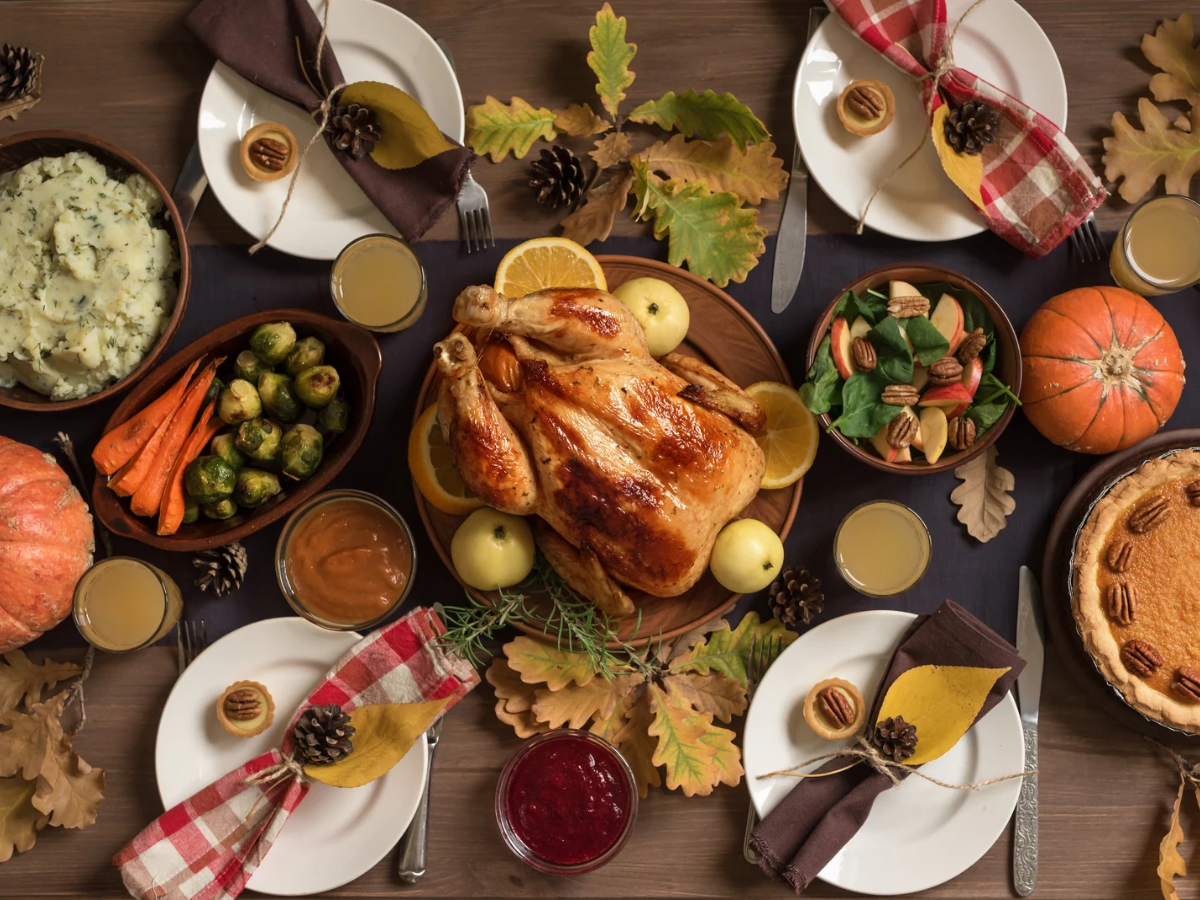
Moving frequently stripped me of the need for extra holiday trappings. Some years, we enjoyed Christmas dinner from camp chairs arranged under our miniature artificial tree because our household goods had not arrived. One Christmas, we passed around the phone to talk to Dad in Iraq. Often, we spent holidays with folks we just met. Our table still ends up with an assortment of guests who, like us, are far from home. Several Thanksgivings ago, my teenagers lobbied earnestly for fried chicken and ham. Clearly, I view the holiday meal with flexibility, but this request stretched even me. We struck a deal. Fried chicken, purchased from KFC, and ham graced the Thanksgiving table, much to the amusement of our guests who came from varying walks of life.
Mandatory fun commitments crowd the calendar from Thanksgiving to the New Year, exhausting even the most extroverted. Each year, my husband and I abstain from some of these events. Slowing the pace—clearing the calendar for a day or two (or three!)—focuses us more on Christ. Creating margin provides time for family dinners and Advent readings, as well as singing hymns together—beautiful unhurried moments that focus our hearts on Jesus.
Streamline Gifts
My husband’s family challenged the established order of Christmas gift-giving. His family opens Christmas gifts in a daily sequence. On December 22, the family opens gifts from friends. On December 23, they open gifts from extended family. Gifts from immediate family, barring gifts from parent to child and stockings, are opened on Christmas Eve. Then, after the children are in bed, parents set out a pile of unwrapped presents and a stocking to be discovered on Christmas morning. Yes, I did say unwrapped.
If this practice offends you, I empathize. It took me years, but I finally realized that simplifying the gift process allows for a greater appreciation for both the giver and the gift. Young children’s attention spans are stretched on Christmas Day. Exhaustion and greed set in, as children cannot remember or appreciate the sheer number of gifts they receive or the people who gave generously to them. Spreading out the gift opening counters this temptation. I cannot tell you how freeing it is to eliminate the wrapping of Christmas presents.
In our American culture, purchasing gifts for multiple children, family, and friends increases budgetary and personal stress. Children expect extravagance, missing the entire point: our gift-giving reflects the most spectacular gift of all time, the birth of Jesus Christ. For many years, I tried to move the focus of gift-giving off our family and place it on others. Could we make cookies for the neighbors? Can we use some of our Christmas money to pick out toys for a sponsored child? Can we contribute to a specific need in a Christian ministry? Offer babysitting or yard help? What can we give? Why do we give?
As John proclaims, “For God so loved the world, that he gave his only Son, that whoever believes in him should not perish but have eternal life” (John 3:16). As we give, we point others to the greatest gift of all, Jesus. Our manner of giving to one another should encourage us to rejoice in him, a heart posture that does not require luxury, ribbons, or bows.
Prioritize People
One memorable Christmas, our family made quite the, ahem, impression. New to the area, we attended church with our four children under the age of six. A kind Christmas pageant coordinator bestowed the coveted roles of Mary and Joseph on our two oldest children. Church staff provided costumes and instructions on ironing. Despite being utterly exhausted from the demands of moving, the holidays, and four young children (including a newborn and a medically fragile toddler), I readied us for the big day.
I forgot one thing.
This church held its pageant during Sunday school before the church service, and I neglected to communicate this detail to my husband. Aware of my fatigue, he turned off my alarm, gathered the children for a fun breakfast, and let me sleep.
And so, that is how it came to be that both Mary and Joseph failed to appear in the Christmas pageant. My utter mortification compounded with my children’s grief at being denied this much-desired honor. The three of us cried when I awoke and realized the mistake. I seriously considered never showing my face at that church again. We had only attended a few months—couldn’t we just go somewhere else? My husband’s resolve held the day, and we marched in for the service (having just missed the pageant), covered in shame and apologizing profusely. But my husband was right. Isn’t the church to be a home for those of us who don’t measure up? Aren’t our failures opportunities for our church family to shine gospel light into our lives?
This church prioritized people over a perfect Christmas pageant. They saw beyond the missing Mary and Joseph to a young family worn out from moving, medical challenges, and the demands of life. Lavishing us with grace and friendship, they provided meals and babysitting, encouragement, and prayer. They taught me a valuable lesson: who can I love in the midst of their failure? Jesus Christ came to save those who do not have it all together. I want to show this same love to others, so that they too might know Jesus, the One who came to save them from their sins.
Every year, I still feel a pull to “do more” during the holidays. Another side dish. Better decorations. More perfect gifts. That additional commitment. But those hard lessons learned in the early years of our marriage and parenting echo into today. To cling to Jesus during the busyness of the holidays, I must streamline life, streamline gift-giving, and prioritize people. Like my four-year-old daughter, I must stop in the chaos to kneel in prayer.
For to us a child is born, to us a son is given; and the government will be upon his shoulder and his name shall be called Wonderful Counselor, Mighty God, Everlasting Father, Prince of Peace (Isaiah 9:6).
Come, ye thankful people, come.
Longing for Christmas is a teenage devotional that looks at twenty-five promises God made and fulfilled in the coming of Jesus. As we explore the way God has kept his promises, we can be encouraged that ALL of the longing we feel—for a better world and for things to be made right—will be fully met in Jesus.