AI is an amazing tool. As a teacher, I have used it to compile research, format communications, and spark creative output and interaction for students. It has saved me hours and headaches creating review games and practice standardized tests. However, as a parent and a teacher, I have an important, overarching concern about AI. I regularly witness AI strangle creativity and critical thinking skills.
God reveals himself to be a thinking, speaking, and creating God. He made us in his image and calls us to use his gifts to grow in likeness to him. AI isn’t inherently evil. On the contrary, this human creation is a testament to the way God has made us. AI itself is a product of the knowledge and creativity he has called us to pursue. However, creations make terrible masters, and any tool can be destructive if misused. The greatest danger of AI is if our children—or we—sacrifice our minds to the simplicity and ease of our own creation.
How AI Is Changing the Classroom
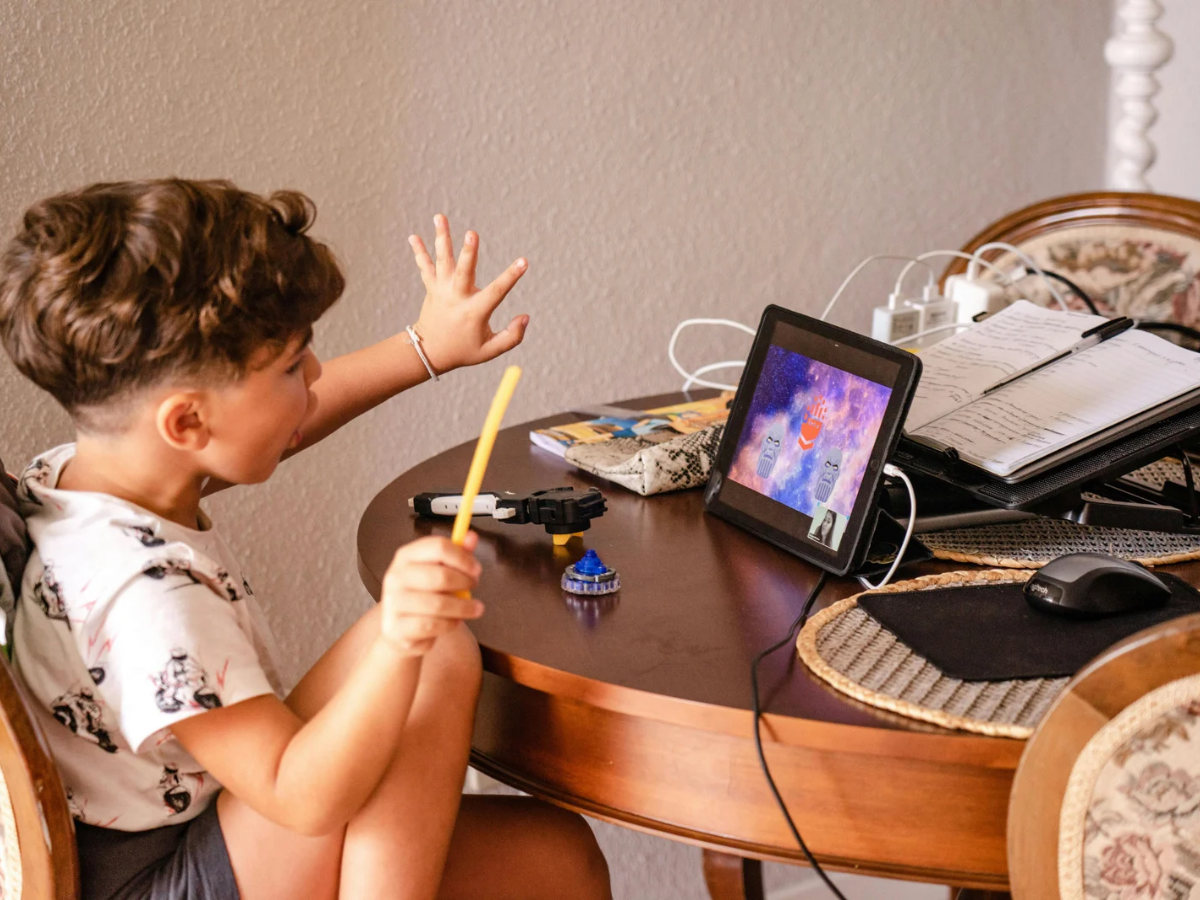
Most schools have programs that allow teachers to watch their students’ screens as they work. Every time we have a research day, multiple students come up to me and tell me, “The answer isn’t on the internet.” They type in a search question and read the AI summary. If what they were looking for isn’t there, they give up. It is a foreign concept to many students to read through multiple sources, evaluate the information, or re-evaluate the questions they’re searching for.
Likewise, many students produce answers full of correct information, but they do not actually address the questions or ideas with which they are supposed to be wrestling. When asked to clarify their answers and relate them to the ideas, they do not understand. They have abandoned critical thinking for easy access to information provided by a tool.
I had these exact concerns the moment AI came to the public. I was not concerned about AI’s existence but its marketing. The first commercials I saw presented AI with the tone of a teacher or counselor. Companies advertised AI as an authority rather than a collector of possibilities. I have witnessed adults and students alike fall victim to this trap. We live in an age that idolizes technology, and with that idolization comes submission to the supremacy of technology. I believe there are some foundational concepts we can teach our children to resist and overcome when it comes to responsible AI use.
1. AI scours the internet for its output, and almost everything is on the internet.
Almost all the good and bad ideas that exist are somewhere on the internet. AI’s job is to compile that information in a response. That means children need to be tough to think critically about whether or not the AI response is good. One cannot simply count on an algorithm to do this for them. God has made us a new creation in Christ and has called us to live our lives in union with him (Rom. 6:3-5). Christians are spirit-filled image-bearers meant to be his instruments. Children shouldn’t forfeit these gifts to human creations.
2. You can’t find everything on the internet.
Morality and wisdom ultimately come from God. They also come through common grace and the Holy Spirit working in human beings. AI cannot clearly distinguish where to find true wisdom. It is up to people, who have sought the mind of Christ and cultivated virtues through regular prayer, fellowship with believers, and meditation on Scripture, to evaluate all information for wisdom and morality. AI is not the shortcut to easy answers for anything.
3. Creativity and critical thinking weaken when unused.
After salvation in Christ, being made in God’s image is one of the greatest gifts given to us. We need to remind our children of this. He has given us a mind and heart for thinking, knowing, and creating. We are not being good stewards—nor are we living the life we were made for—if we let these gifts shrivel within us because a computer can do something like it for us quickly and easily.
It is tempting to let something take over the work of thinking and creating, because it is work. But it is good work—necessary work. We should always strive to help our children be more of what God made us to be. Don’t let ease and speed rob them, or us, of the life they were meant to lead. We can use AI as an assistant, but we should never let it carry the full load we were made for.
I agree with the majority of educational philosophies about AI right now. Banning its use is futile. We should teach students how to use AI properly, harnessing it as a tool that can sharpen our critical thinking and fuel our creativity. When we remember our God-given roles, AI ceases to harm and can become yet another gift of the beauty of human thought and creativity. God calls us, and our children, to evaluate truth and wisdom in light of what he has shown us in his Word and planted in our hearts through his Spirit. As his image-bearers, we should create true and beautiful things according to what he has declared true and beautiful.
The Rooted Parent Podcast, hosted by Cameron Cole and Anna Meade Harris, brings timeless biblical truth to modern parenting struggles and aims to equip and encourage parents as they disciple their children to lifelong faith in Jesus Christ.